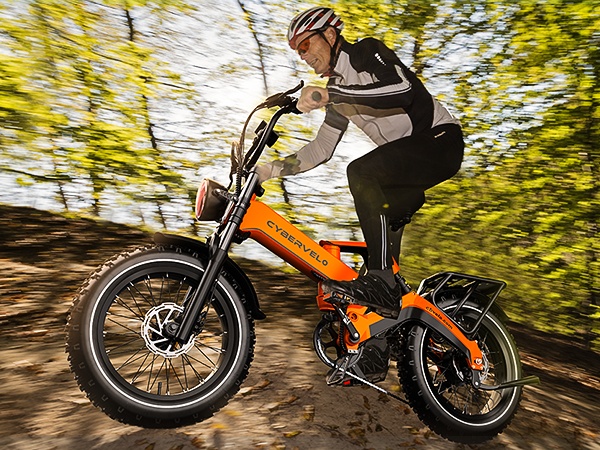
If you have spent any time research off-road electric bikes lately, you already know the frustration. On one side, you see ultra-cheap fat tire bikes that look great in photos but fall apart after two trail rides. On the other, high-end mountain e-bikes cost as much as a used motorcycle.
Finding true value—where performance, range, and durability meet a reasonable price tag—is tough.
Whether you are tackling loose gravel, climbing steep forest trails, or looking for an all-terrain commuter that can take a weekend beating, this guide breaks down what actually matters in a budget-friendly trail e-bike, and compares two distinct approaches to off-road riding.
What Really Drives Off-Road E-Bike Value?
Before looking at specific models, let’s clear up a common misconception: more expensive does not always mean better suited for your riding style.
When evaluation an off-road e-bike for long-term value, focus on these three core metrics rather than flashy marketing buzzwords:
1. Torque Over Pure Speed
On asphalt, top speed matters. Off-road, torque is king. A high torque rating (measured in N·m) dictates whether your bike easily ascends a 30-degree dirt incline or leaves you pedaling frantically halfway up.
2. Real-World Range and Battery Capacity
Trail riding drains batteries significantly faster than street cruising. Loose dirt, steep grade, and aggressive throttle usage demand larger amp-hour (AH) capacities. A 40AH or 50AH setup gives you real peace of mind when you are miles away from the nearest power outlet.
3. Frame Geometry & Trail Comfort
Off-road riding exposes your bike to continuous impact. Puncture-resistant fat tires, reliable hydraulic stopping power, and robust suspension systems aren’t luxury upgrades—they are essential safety features.
Matching Your Ride Style: Compact Versatility vs. Raw Power
Different riders need completely different tools. To demonstrate how to evaluate cost-effectiveness based on actual use cases, let’s look at two high-value configurations designed for very different trail scenarios.
The RV, Camping & Versatile Trail Rider
If you need a trail-capable machine that can also fit into the trunk of a car, the back of an RV, or a tight apartment closet, a folding fat-tire setup is the sweetest spot for value.
Take a look at the EK6 MAX Folding Electric Bike.
| EK6 MAX Core Specs At a Glance | |
| Battery | 48V 40AH (Up to 120 Miles Range) |
| Motor & Speed | 1500W High-Speed Motor / 40 MPH Top Speed |
| Tires | 20×4.0 Puncture-resistant with Reflective Strip |
| Braking & Gearing | Premium Hydraulic Disc Brakes / Shimano 8-Speed |
| Key Highlight | Full Dual Suspension & Magnesium Alloy Frame |
Why it offers high value:
- No Trailer Required: Traditional full-sized off-road e-bikes often require expensive hitch racks. The foldable magnesium alloy frame cuts down transport costs immediately.
- All-Day Battery Life: The massive 48V 40AH battery solves the biggest issue with compact bikes—short range. You get up to 120 miles of range, making it ideal for multi-day camping trips.
- Trail Readiness: Fitted with a full dual suspension system, puncture-resistant 20×4.0 fat tires, and hydraulic disc brakes, it absorbs trail chatter while giving you precise control on loose terrain.
The Full-Throttled Trail & Hill Climber
If your idea of off-road riding involves steep mountain inclines, deep sand, or mud where standard e-bikes stall out, you need raw muscle and maximum frame rigidity.
This is where heavy-duty setups like the Cybervelo EK9 Off-Road E-Bike
| EK9 (60V 50AH) Core Specs At a Glance | |
| Battery | 60V 50AH (Up to 120 Miles Range) |
| Motor & Speed | 5000W Beast / 50 MPH Top Speed |
| Torque | 120 N·m Extreme Hill-Climbing Torque |
| Tires & Frame | 26×4.0 Fat Tires / Durable Aluminum Alloy Frame |
| Braking & Suspension | TEKTRO / Logan 203mm Hydraulics & Dual Crown Fork |
Why it offers high value:
- Conquers Steep Incline: Packing a massive 5000W output backed by 120 N·m of torque, this machine eliminates the need for expensive gas-powered dirt bikes for off-road recreation.
- Heavy-Duty Braking Power: High speeds demand serious stopping ability. Equipped with heavy-duty 203mm hydraulic brakes (TEKTRO/Logan), it provides predictable stopping distance on steep descents.
- Maximum Traction: Full-sized 26×4.0 fat tires combined with an adjustable dual-crown aluminum alloy suspension fork keep the front wheel planted when hammering through rough, unpaved terrain.
Buyer’s Checklist: 4 Things to Avoid Before Buying
To get true cost-effectiveness out of your purchase, keep an eye out for these red flags:
- Mechanical Brakes on High-Power Bikes: Avoid cable-actuated mechanical brakes on bikes exceeding 750W or weighing over 60 lbs. Always opt for hydraulic disc brakes for off-road safety.
- Small Batteries on “Off-Road” Claims: A 10AH or 14AH battery will drain in less than an hour on rough trails. Look for 20AH+ (or dual battery setups/high amp-hour units like 40AH-50AH) if you plan long trail days.
- Low-Grade Drivetrains: Dirt and dust ruin cheap shifters instantly. Look for reliable components like Shimano triggers that offer crisp gear shifts under load.
- Vague Frame Ratings: Stick to proven materials like heat-treated Aluminum Alloy or lightweight Magnesium Alloy to prevent frame flexing under high stress.
Final Verdict: Which Off-Road E-Bike Fits Your Budget?
Finding the most cost-effective off-road e-bike comes down to defining your terrain and storage limits:
- Go with a folding model like the EK6 MAX if you need an agile, portable long-range setup for camping, mixed-surface exploration, and easy vehicle transport.
- Step up to a power-house like the EK9 if you crave extreme speed, massive torque for steep climbs, and the stability of full-size 26-inch fat tires.
Prioritize battery capacity, hydraulic braking, and structural strength over unneeded aesthetic gimmicks, and you will get years of high-performance trail riding without breaking the bank.
发表回复