Finding a reliable electric bike when you are a heavier rider isn’t as simple as picking the prettiest model on display. Most standard e-bikes are built for average body weights, capping out around 200 to 250 lbs. Ride one of those over bumpy streets or up a steep slope, and you’ll quickly notice the frame flex, the motor struggle, and the brakes squeal under pressure.
If you weigh over 250 lbs or need to carry heavy gear, you need a high-payload e-bike engineered for structural integrity, raw torque, and stability.
Let’s cut through the marketing noise and look at what actually matters when picking a heavy-duty e-bike, along with three solid setups built specifically to handle up to 400 lbs without breaking a sweat.
What Actually Matters When Buying an E-Bike for Heavy Riders?
Before looking at specific models, you need to know which components take the most abuse when carrying extra weight.
1. Payload Capacity vs. Frame Material
Payload capacity isn’t just a suggestion; it’s a safety metric. Look for bikes rated for at least 400 lbs. High carbon steel frames offer incredible rigidity and weight distribution, preventing dangerous frame flex during sudden maneuvers or heavy cornering. High-grade aluminum alloys are also great if the tubing is thick and fully reinforced.
2. Motor Power & Raw Torque
Wattage matters, but torque gets you moving. Heavy riders need high-torque motors (at least 80–120 N·m) to prevent dead-stop stalls on inclines. A 1000W motor is generally the sweet spot for everyday commutes, while extreme off-road or high-speed applications demand up to 5000W to handle the added load effortlessly.
3. Tire Width and Wheel Base
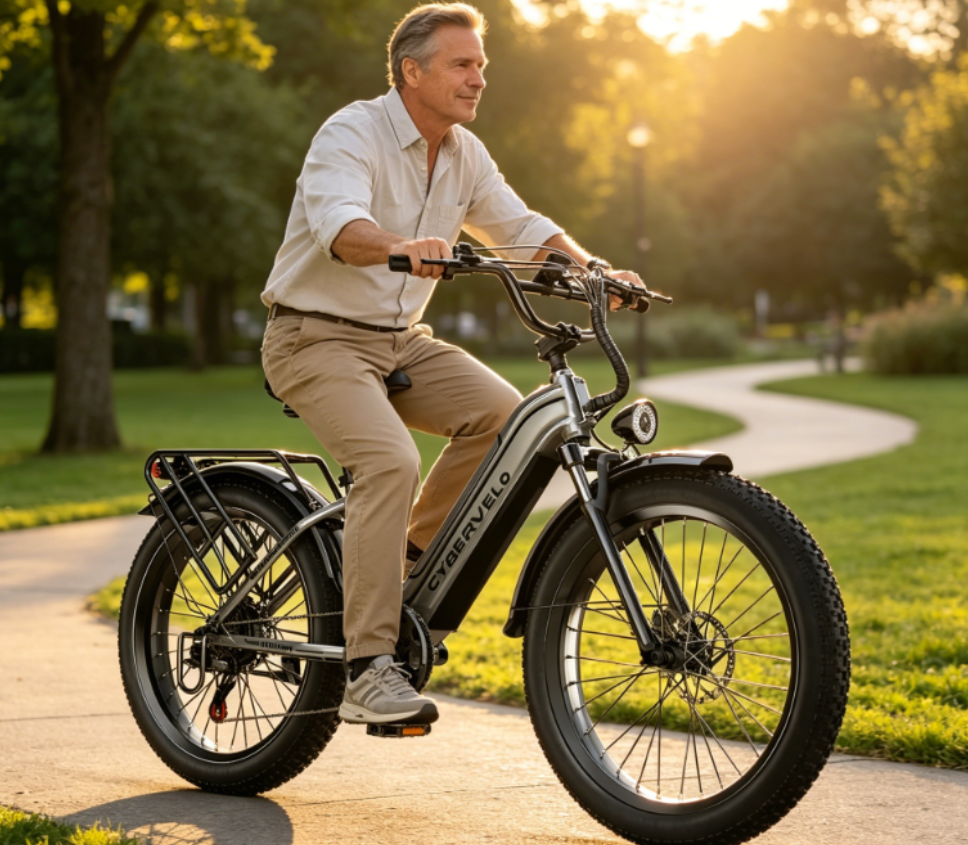
Thin tires under heavy loads increase puncture risks and offer terrible traction. Wide fat tires (ranging from 20×3.0 up to 26×4.0 inches) act as natural shock absorbers, increasing the contact patch with the road to improve grip and reduce overall system wear.
4. Stopping Power (Brakes)
Stopping a combined load of 400+ lbs requires serious braking hardware. Look for hydraulic disc brakes with large rotors (203mm preferred) or lockable braking systems. Mechanical rim brakes simply won’t slice it.
3 Purpose-Built E-Bikes Engineered for Up to 400 Lbs Payload
Different riders have different needs—some want everyday comfort, others need maximum balance, and a few want raw performance. Here is how three distinct setups tackle the extra payload challenge.
| Feature / Model | Cybervelo C16 | Cybervelo EK12 | Cybervelo EK9 |
| Design Type | 3-Wheel Electric Trike | Step-Thru Fat Tire | High-Power All-Terrain |
| Frame Material | High Carbon Steel | High Carbon Steel | Aluminum Alloy |
| Motor Power | 1000W | 1000W | 5000W (120 N·m Torque) |
| Max Payload | 400 Lbs | 400 Lbs | 400 Lbs |
| Battery Capacity | 48V 20.8AH | 48V 20AH | 60V 50AH |
| Top Speed | 20 MPH | 28 MPH | 50 MPH |
The Unmatched Stability Choice: Cybervelo C16 Electric Tricycle
If balance is your primary concern, standard two-wheel bikes can feel intimidating at slow speeds or full stops. A three-wheel setup removes balancing issues entirely.
The Cybervelo C16 Electric Tricycle is built around a heavy-duty high carbon steel frame capable of holding up to 400 lbs.
- Why it works for heavy riders: The 3-wheel design inherently prevents tipping over at red lights or during slow turns. It combines a 20×3.0 front tire with massive 16×4.0 rear tires for maximum ground traction.
- Key Features: Powered by a 1000W motor and a 48V 20.8AH battery, it reaches up to 20 MPH with a range of 50 miles.
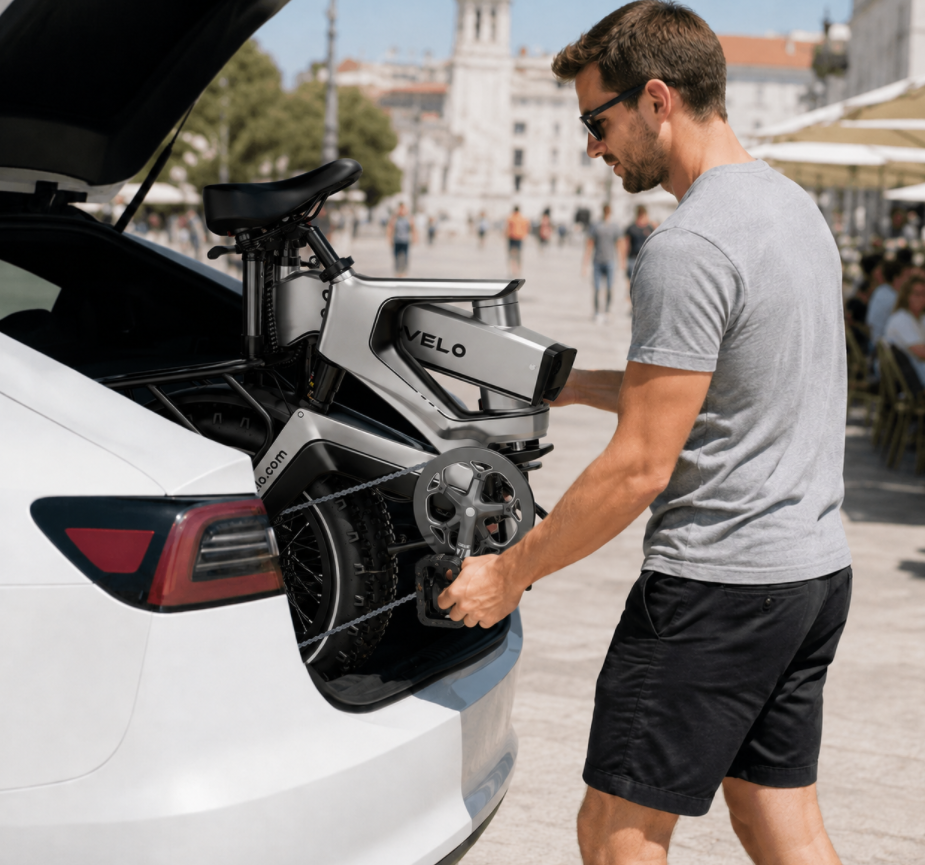
- Real-world perks: Features a foldable frame for storage, a high-contrast colourful LCD display, rearview mirrors, and lockable brakes that keep the trike completely stationary while loading heavy groceries into its large capacity rear basket.
The Everyday Comfort Cruiser: Cybervelo EK12 Step-Thru E-Bike
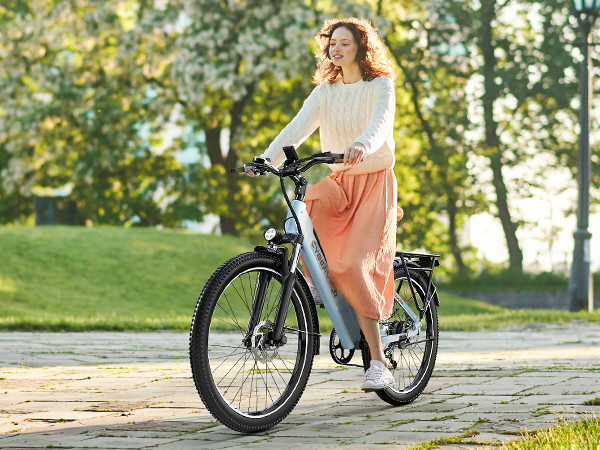
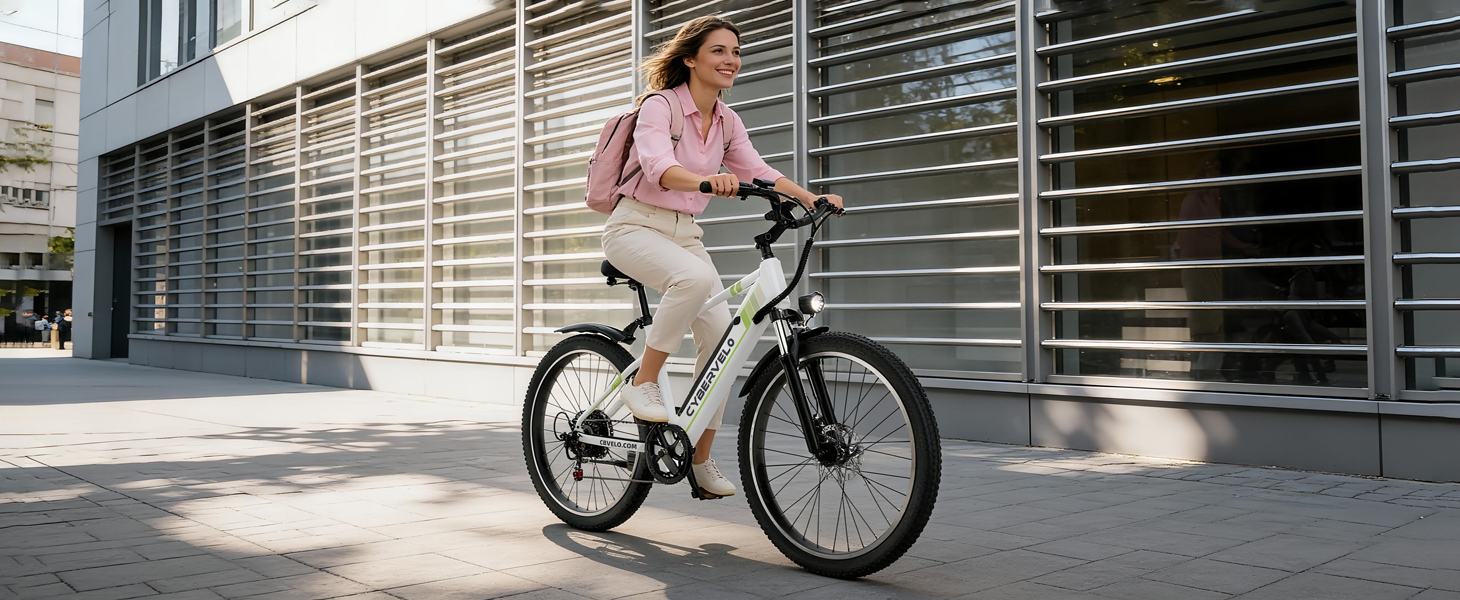
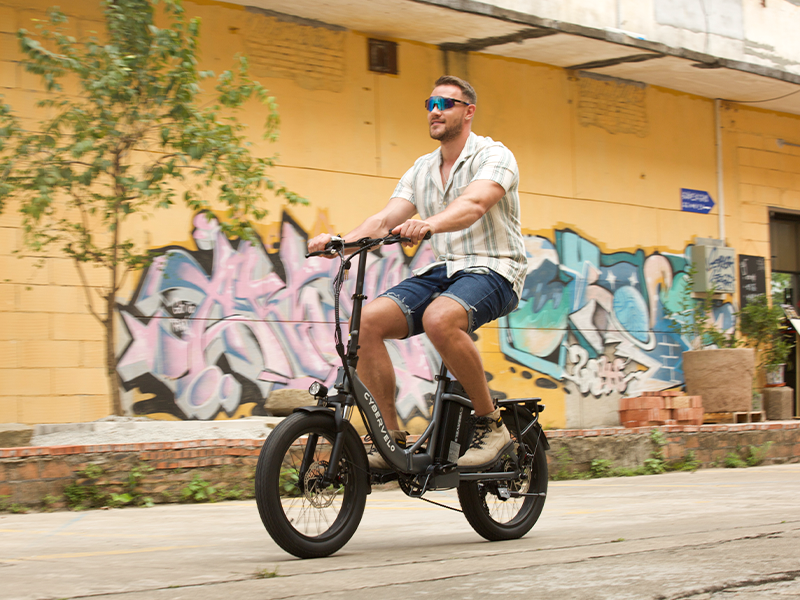
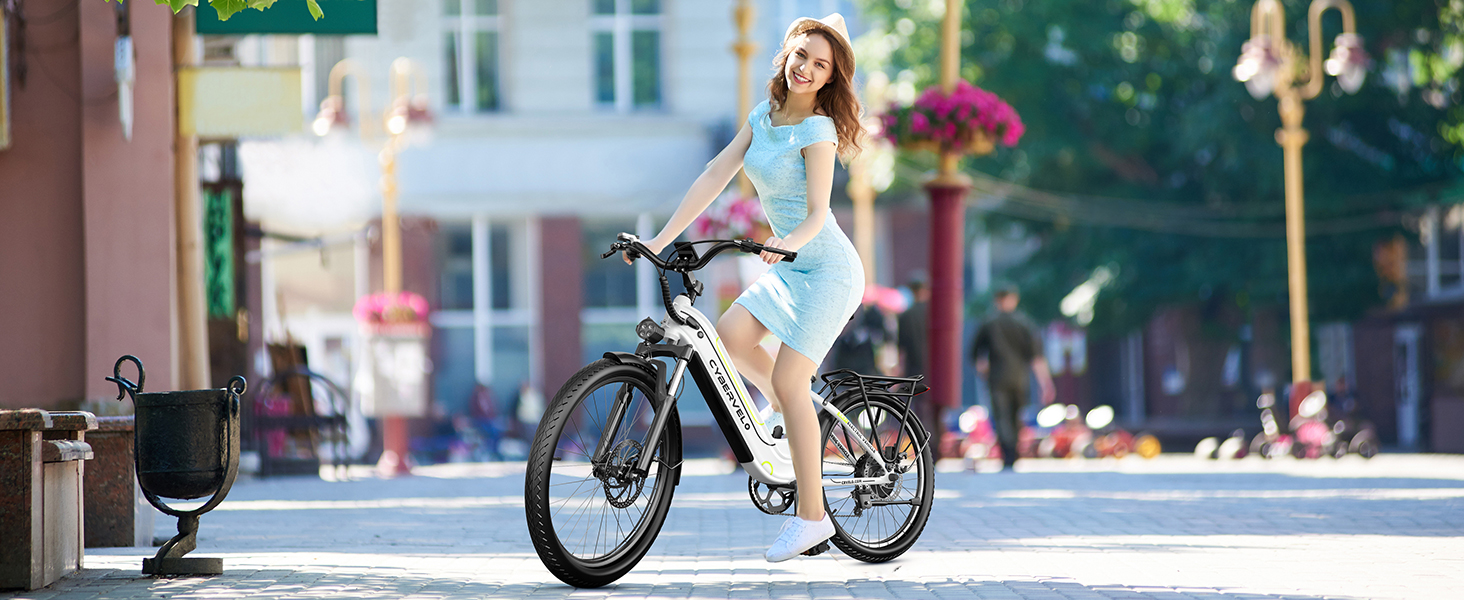
For riders who want a traditional bike layout without struggling to swing a leg over a high top tube, step-thru frames are a game changer.
The Cybervelo EK12 Step-Thru E-Bike bridges the gap between massive load capacity and total ergonomics.
- Why it works for heavy riders: Swinging a leg over a high frame while balancing a heavy bike is tough. The step-thru design eliminates that completely. Coupled with larger and wider seat cushions, it relieves pressure points during extended rides.
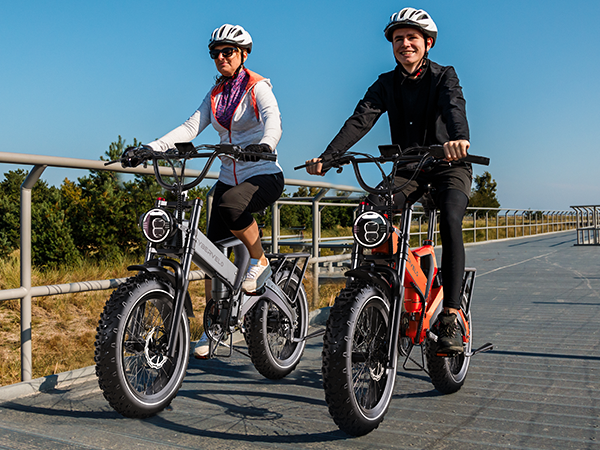
- Key Features: Built with high carbon steel, a 1000W motor, and a 48V 20AH battery, delivering speeds up to 28 MPH and an impressive max range of 80 miles under ideal conditions.
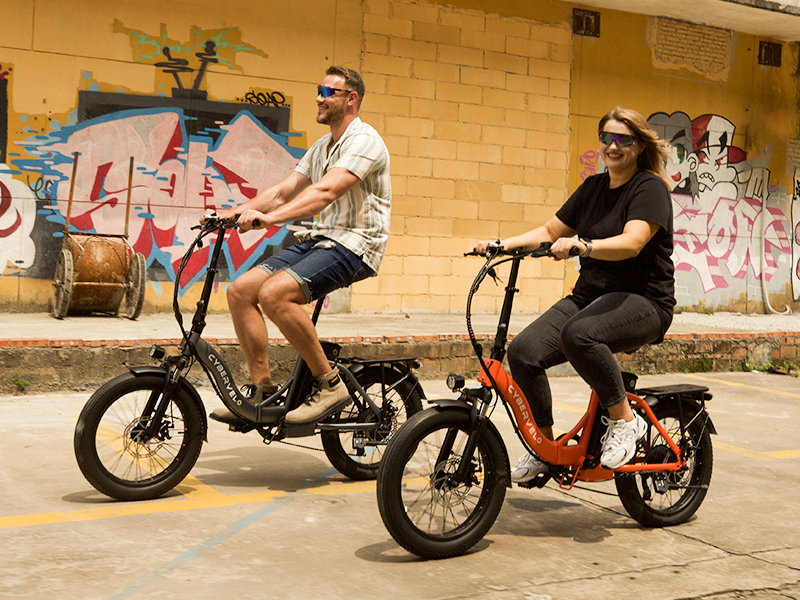
- Suspension & Tires: Outfitted with 20×4 fat tires plus front and rear shock absorbers, this bike smooths out rough city streets and absorbs road vibration before it hits your back. Front and rear basket mount options give you plenty of cargo flexibility.
The High-Torque Performance Beast: Cybervelo EK9
When hills, off-road trails, or sheer acceleration are non-negotiable, standard 750W or 1000W motors might still feel sluggish on steep climbs under a 300+ lb load.
The Cybervelo EK9 (60V 50AH) is an absolute powerhouse designed for extreme demands.
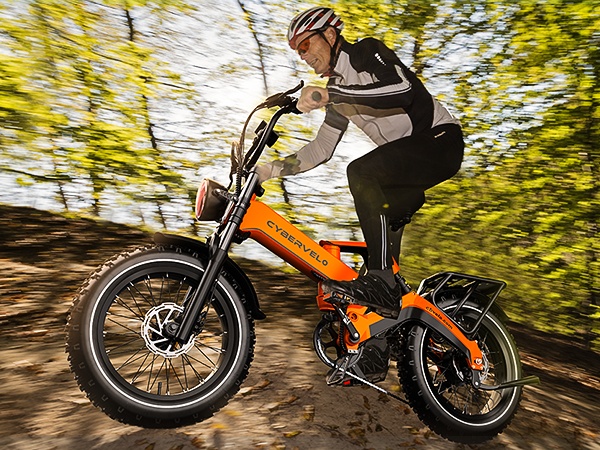
- Why it works for heavy riders: Carrying extra weight requires raw torque. The EK9 packs a massive 5000W motor delivering 120 N·m of torque, meaning you can tackle steep inclines without losing momentum.
- Stopping & Control: High speed and high payload demand elite stopping power. The EK9 comes equipped with TEKTRO hydraulic brakes / Logan 203mm hydraulic brakes for instant, controllable stopping power. The dual crown aluminum alloy suspension fork with lockout keeps front-end steering rigid and precise.
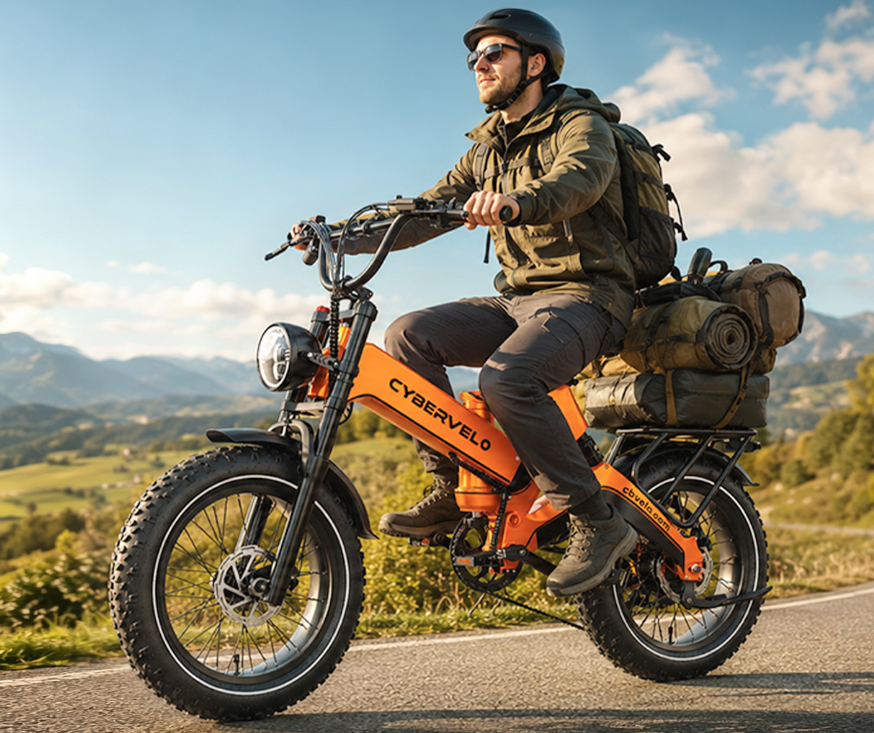
- Key Specs: Features a durable aluminum alloy frame, 26×4.0 oversized fat tires, a massive 60V 50AH battery providing up to 120 miles of range, a large color dashboard, and a top speed reaching 50 MPH.
Frequently Asked Questions
Will riding an e-bike at maximum weight capacity drain the battery faster?
Yes. Extra payload forces the motor to draw more current, especially during startup and climbing. If you are near the 400 lb limit, opt for higher amp-hour batteries (like 20AH or 50AH setups) to maintain a decent range without constant recharging.
Are fat tires really necessary for heavier riders?
Highly recommended. Wider tires (3.0 to 4.0 inches) distribute weight over a broader surface area. This dramatically reduces the risk of rim damage over potholes, provides better cornering grip, and allows for lower tire pressure to absorb bumps.
Is high carbon steel better than aluminum for heavy payload e-bikes?
High carbon steel offers superior fatigue resistance and flex tolerance under heavy static loads, making it ideal for utility trikes and city cruisers like the C16 and EK12. However, thick, high-grade aluminum alloys (used in performance bikes like the EK9) work just as well while saving overall vehicle weight.
The Bottom Line: Which Setup Should You Choose?
- If you prioritize zero-balancing effort, stability, and utility cargo capacity, go with the Cybervelo C16 Trike.
- If you want easy mounting, comfortable seating, and smooth city commuting, the Cybervelo EK12 Step-Thru is your best bet.
- If you need unmatched hill-climbing power, high top speeds, and rugged all-terrain strength, the Cybervelo EK9 is built for the job.
Always check payload ratings before you buy, keep your tires inflated to proper pressures, and pick a bike designed to support you safely for years to come.